Usage-based car insurance programs promise a discount for being a safe driver, and the marketing around them — “save up to 30%,” “get rewarded for good driving” — makes it sound like a one-directional deal: drive well, pay less, no downside. That framing is incomplete, and it matters financially. Independent reviews of Progressive’s own Snapshot program, one of the largest usage-based programs in the country, put the share of participants who end up with a rate increase at roughly one in five drivers — not a discount, an actual surcharge, triggered by hard braking, speeding, late-night driving, and phone use behind the wheel. That’s a meaningfully different pitch than “opt in and save money,” and it’s the piece most coverage of usage-based insurance leaves out entirely.
This guide covers what these programs actually track, how the major players differ from each other in ways that matter to your wallet, the realistic savings range backed by the insurers’ own published numbers, and — just as importantly — who should think twice before enrolling at all.
Two Different Kinds of “Usage-Based” Insurance
The term gets used loosely in marketing, but there are genuinely two distinct pricing models underneath it:
- Pay-As-You-Drive (PAYD): pricing based mainly on how much you drive. Fewer annual miles, lower premium. Simple, hard to game, and less privacy-invasive since it’s primarily tracking mileage rather than driving behavior.
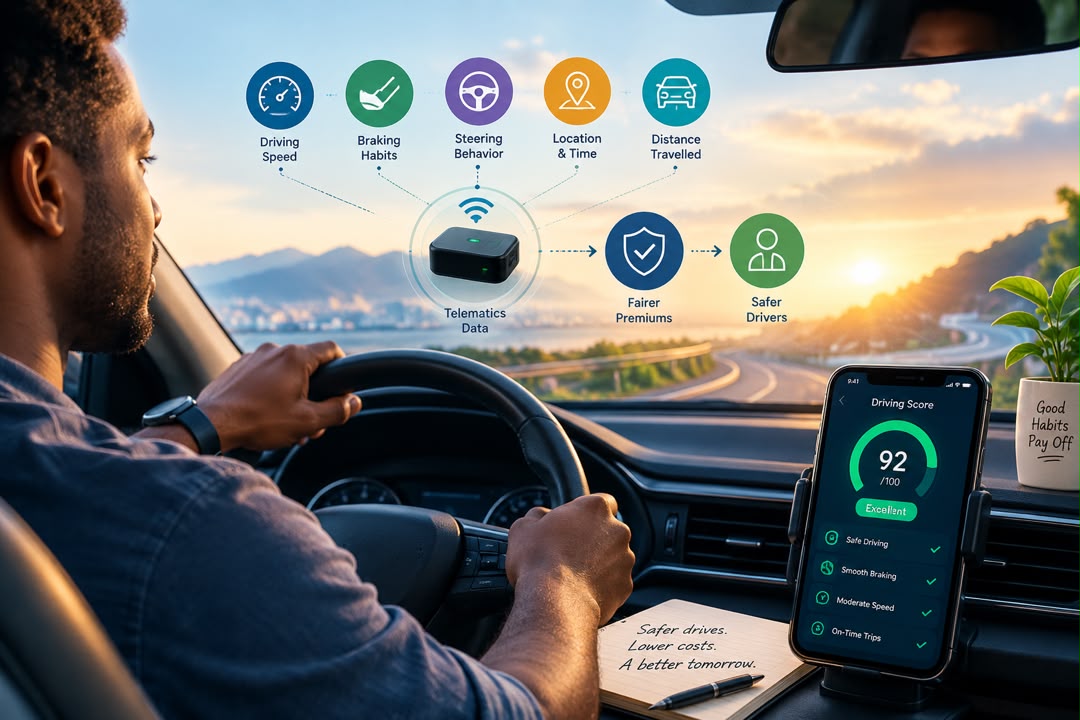
- Pay-How-You-Drive (PHYD): pricing based on how you drive — braking patterns, acceleration, cornering force, speed relative to posted limits, time of day, and on app-based programs, phone handling while the vehicle is in motion. This is what Progressive Snapshot, State Farm’s Drive Safe & Save, and Allstate’s Drivewise actually measure, and it’s the version where your driving behavior, not just your odometer, moves your price in either direction.
How the Programs Actually Collect Your Data
Three collection methods are in common use across the industry:
- Smartphone app — uses your phone’s GPS and motion sensors. Easiest to enroll in, requires no hardware, but also means the app can pick up phone handling and screen use while driving as a scored data point.
- Plug-in OBD-II device — plugs directly into your car’s diagnostic port. More precise on hard-braking and acceleration events specifically, and doesn’t depend on your phone being present or charged during a trip.
- Built-in manufacturer telematics — increasingly standard on newer vehicles with factory connectivity, requiring no separate app or hardware at all.
What Progressive Snapshot’s Own Data Actually Shows
Because Snapshot is one of the most-reviewed usage-based programs, its published performance numbers are worth citing directly rather than taking the marketing at face value. According to Insurify’s independent review of the program, new enrollees receive an automatic participation discount upon signing up — Progressive advertises an average of $169 in initial savings over the first six months. Drivers who complete the full monitoring period and continue with Progressive go on to earn an average of $322 per year in ongoing discounts, according to Progressive’s own figures.
But the same review is explicit about the other side of that coin: approximately two in ten drivers see an increased premium at the end of the Snapshot monitoring period rather than a discount. MoneyGeek’s analysis of the program identifies the specific triggers — frequent hard-braking events, speeding above posted limits, trips between midnight and 4 a.m., and phone use while driving all factor into whether a participant ends up with a surcharge instead of a discount at renewal. Snapshot is also not available in California, so eligibility itself depends on where you live.
One detail worth understanding before you enroll: the discount you receive automatically at sign-up is not the same as the final adjustment applied at renewal. The participation discount is essentially a sign-up incentive; the real pricing outcome is determined by what your actual driving data shows during the monitoring period, and it can move your rate in either direction from where you started.
Comparing the Major Programs
| Program | Insurer | Data Method | Publicly Documented Surcharge Risk |
|---|---|---|---|
| Snapshot | Progressive | App or plug-in device | Yes — ~20% of participants see a rate increase, per independent reviews |
| Drive Safe & Save | State Farm | App or connected car | Discount applied at enrollment; renewal pricing can incorporate driving score |
| Drivewise | Allstate | App | Can affect renewal pricing in both directions |
| Root Insurance | Root (telematics-first insurer) | App-only, required for a quote | Your entire initial quote is built from a driving-test period — there’s no separate opt-in step |
Always confirm current terms directly with each insurer before enrolling — specific discount caps, surcharge limits, and state availability change and vary.
The Realistic Savings Range
Based on Progressive’s own published figures, real average savings for successful participants land somewhere in the 10–20% range of their premium, which lines up with the commonly cited industry range for usage-based programs generally. The number that matters more than any headline discount percentage is what happens at renewal: some programs apply a one-time discount based on an initial monitoring window, while others continue scoring your driving indefinitely and adjust pricing at every renewal cycle going forward.
Who Actually Benefits — and Who Shouldn’t Bother
Good fit: low-mileage drivers, daytime commuters, and people who already drive cautiously and want that reflected directly in their pricing rather than averaged into a broader risk pool alongside less careful drivers.
Poor fit: people who regularly drive late at night for legitimate reasons — shift workers, for example — since nighttime driving hours are scored as elevated risk regardless of how carefully you’re actually driving. Also a poor fit: anyone whose commute involves unavoidable hard braking in dense urban stop-and-go traffic, since the sensors can’t always distinguish “unavoidable city driving” from “aggressive driving.” And for app-based programs specifically, anyone who frequently rides as a passenger while the app remains active, since some apps can’t reliably distinguish driver from passenger.
The Trade-Off Nobody Puts on the Homepage
Enrolling means handing your insurer a continuous stream of your location, speed, and driving-behavior data — for as long as you remain enrolled, not just during a one-time trial. That data doesn’t only inform your premium; it becomes part of a permanent record your insurer can reference at every future renewal, and data-sharing terms in the fine print sometimes allow broader internal use than most enrollees realize. If privacy matters more to you than a modest, uncertain discount, that’s a completely legitimate reason to skip these programs — enrollment is optional, and declining doesn’t prevent you from getting standard-tier pricing.
How to Opt Out
Every major program allows you to decline enrollment, or to remove the device/app mid-program, without affecting your underlying eligibility for a policy — telematics participation is optional, never a requirement to be insured in the first place. If you’ve already enrolled and want out, contact your insurer directly; for plug-in devices, physically removing the device typically halts data collection immediately, though confirm with your specific insurer how quickly that’s reflected in your actual pricing.
Where This Fits Into Your Broader Insurance Picture
If you’re weighing a telematics program specifically because you drive an EV, our companion guide on EV Battery Insurance 2026: What Your Policy Actually Covers covers the separate question of how comprehensive and collision coverage treats battery damage — a distinct issue from telematics pricing, but one every EV owner evaluating their policy should understand alongside it. And if the privacy trade-off discussed above is your main hesitation, Telematics Insurance Privacy Risks: Is Your Car Tracking Too Much Data? goes deeper on exactly what these programs collect and how insurers are permitted to use it. If your interest in telematics is more about fraud prevention than personal pricing, How Telematics and AI Reduce Insurance Fraud in 2026 covers that adjacent angle.
Frequently Asked Questions
Can usage-based insurance actually raise my rate, or only lower it?
It depends on the specific program, but for at least one of the largest — Progressive Snapshot — the answer is clearly yes: independent reviews put the share of participants who see a rate increase at renewal at roughly 20%, triggered by hard braking, speeding, late-night driving, and phone use. Always check the specific program’s documented surcharge policy before assuming enrollment is risk-free.
Is the discount I get when I sign up the same as my final rate?
No. Most programs, including Snapshot, apply an automatic participation discount just for enrolling — that’s separate from the final adjustment applied at renewal, which is based on your actual driving data collected during the monitoring period. The sign-up discount is essentially an incentive to participate, not a preview of your ultimate rate.
Do I have to keep the app or device installed forever to keep any discount I earn?
It depends on the program. Some apply a one-time discount based on an initial monitoring period and then stop tracking; others continue scoring your driving indefinitely and adjust pricing at every renewal. Confirm which model your specific insurer uses before assuming a discount is permanent.
Is Root Insurance different from a telematics add-on program like Snapshot?
Yes — Root builds its entire initial quote around a driving-test period conducted through its app, rather than offering telematics as an optional add-on to an existing standard policy. There’s no way to get a quote from Root without participating in the monitoring period first.
Is usage-based insurance available in every state?
No. Availability varies by program and state — for example, Progressive Snapshot operates in most states but is not currently available in California. Always confirm availability directly with the specific insurer for your state before assuming a program applies to you.
Can I cancel usage-based insurance mid-program without penalty?
Generally yes — enrollment is optional and you can typically unenroll at any point without it affecting your underlying eligibility for coverage. That said, unenrolling before a monitoring period completes usually means forfeiting any participation discount you’d already received, so check your specific program’s terms on how early cancellation affects pricing already applied.
Conclusion
Usage-based insurance isn’t a scam, and for genuinely safe, low-mileage drivers it’s often a legitimate way to lower a premium — Progressive’s own numbers show real, meaningful average savings for drivers who complete the program successfully. But “success” isn’t guaranteed: roughly one in five Snapshot participants ends up paying more, not less, and that risk is rarely front and center in how these programs are marketed.
Before enrolling in any usage-based program, read the specific terms on whether your rate can move upward as well as downward, confirm whether the discount is a one-time snapshot or an ongoing score, and be honest with yourself about your actual driving patterns — including the hours you drive and how your commute is structured — before assuming you’re a safe bet for a discount rather than a surcharge.