The $20,000 Question for Every EV Owner: Where the Warranty Ends and Insurance Begins
The rapid acceleration of Electric Vehicle (EV) adoption has ushered in a new era of automotive technology, simultaneously introducing novel, expensive challenges for the traditional auto insurance industry.
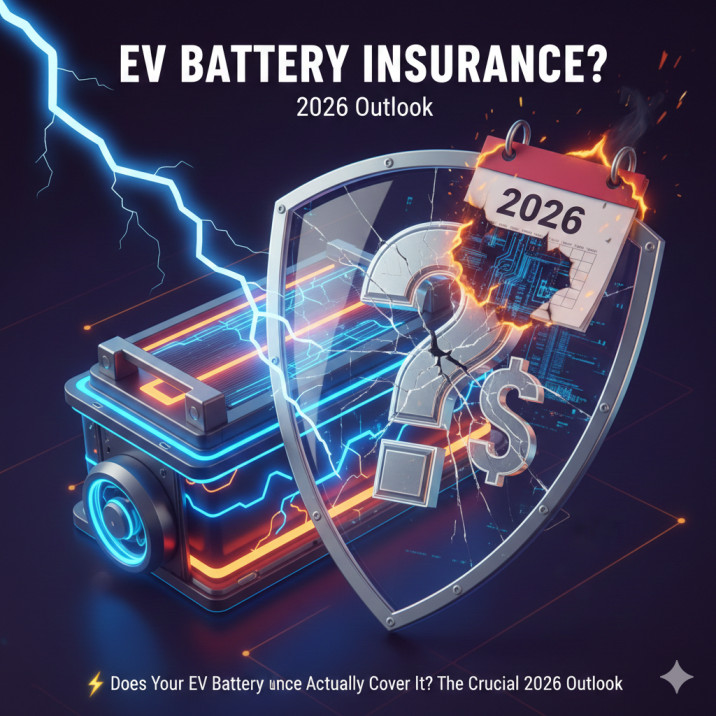
At the heart of this disruption is the high-voltage battery – the single most expensive component of an EV, often costing between $10,000 and $20,000 to replace. The central question for owners and prospective buyers is not merely, “Does my insurance cover it?” but rather, “Under which specific, costly circumstances will it be covered?”
As of 2026, the answer is a complex and nuanced “Yes, but only for certain types of failure, and the primary protection remains the manufacturer’s warranty.” The insurance landscape is rapidly maturing, moving away from applying old rules to new technology and offering specialized products to address the EV battery’s unique risk profile.
This analysis will dissect the three primary forms of battery failure and determine the anticipated coverage mechanisms for each, distinguishing clearly between protection afforded by standard insurance, specialized add-ons, and the manufacturer’s mandate.
I. The Crucial Distinction: Failure Types and Responsible Parties
To understand your coverage in 2026, one must first differentiate between the three primary modes of EV battery failure. Insurance is designed to cover sudden, unforeseen perils, while warranties cover defects and expected lifespan issues.
| Battery Failure Type | Cause | Primary Coverage Mechanism (2026) |
| 1. Accidental Damage (Sudden Peril) | Collision, fire, flood, theft, impact with road debris. | Auto Insurance (Collision & Comprehensive) |
| 2. Manufacturing Defect (Sudden Failure) | Internal cell fault, control module failure, faulty workmanship. | Manufacturer’s Warranty (Primary) |
| 3. Degradation/Wear & Tear (Gradual Loss) | Normal aging, capacity loss below a threshold (e.g., 70%). | Manufacturer’s Warranty (Mandated) or Specialized Rider (Optional) |
II. Standard Auto Insurance: The “Yes” for Catastrophic Events
In 2026, standard auto insurance policies – specifically the Collision and Comprehensive components – will almost universally cover the repair or replacement of an EV battery, provided the damage results from a covered, sudden peril. This is the clearest area of coverage.
A. Collision and Comprehensive Coverage
- Collision Coverage: This pays for damage resulting from a crash with another vehicle or an object (e.g., hitting a pole or a guardrail). If the accident causes structural damage or thermal runaway, the cost of repair or replacement is covered, minus your deductible.
- Comprehensive Coverage: This addresses non-collision events. In 2026, Comprehensive coverage is expected to explicitly cover battery damage from:
- Fire: Lithium-ion battery fires, though rare, are a known catastrophic risk.
- Natural Disasters: Flood damage is a critical risk for high-voltage systems and a common cause of total-loss claims for submerged EVs.
- Theft/Vandalism: Damage to the battery system or, increasingly, the physical theft of a charging cable (though the cable itself may require an add-on).
- Charging Mishaps (Emerging): Some policies are beginning to include coverage for damage caused by connecting to a faulty public charger or an incorrect power source.
B. The Cost and Total Loss Crisis
The coverage is definitive, but the financial implications remain high. The high replacement cost of a battery – often $15,000 or more – means the threshold for an EV to be deemed a total loss (written off) is lower than for a comparable Internal Combustion Engine (ICE) vehicle. By 2026, industry data shows that the average cost of an EV body and battery repair has risen, forcing insurers to set higher premiums to compensate for the greater severity of claims.
- Actionable Add-On: Many insurers offer New-for-Old Replacement as an essential add-on. This ensures that if your vehicle is totaled early in its life (e.g., due to catastrophic battery damage), you receive a brand-new vehicle, rather than a depreciated cash payout.
III. Manufacturer’s Warranty: The Primary Shield Against Defects
For the majority of non-accident-related battery failures – including manufacturing defects and the expected loss of capacity over time – the Manufacturer’s Warranty remains the primary and strongest form of protection in 2026. This is the major exception to the notion that auto insurance covers battery failure.
A. Federal and State Mandates for Battery Coverage
Federal law in the U.S. and similar global regulations mandate a minimum warranty for EV batteries, typically:
- 8 years or 100,000 miles (whichever comes first).
- Capacity Retention: Most manufacturers guarantee that the battery will retain a minimum of 70% of its original capacity throughout the warranty period. (Note: California regulations are pushing this further, requiring 70% retention for 10 years or 150,000 miles for new models starting in 2026).
- Manufacturing Defects: If a cell fails suddenly due to a factory defect, the warranty pays for the repair or full replacement. Insurance is not involved here.
- Degradation: If the capacity drops below the 70% threshold, the manufacturer is obligated to repair or replace the pack. Insurance does not cover this expected wear-and-tear event.
B. The Warranty Gap: Used EVs and Normal Degradation
The complexity arises when your vehicle is out of warranty or when the degradation is considered normal.
- Out of Warranty: If a 10-year-old EV suffers a non-accident-related catastrophic failure, the owner is responsible for the full replacement cost.
- Accelerated Degradation (Under Warranty): The warranty only covers degradation below the specified percentage (e.g., 70%). Loss of capacity above that threshold (say, 85%) is considered normal wear and tear and is not covered by the manufacturer or standard insurance.
IV. Specialized Insurance Products: Bridging the “Grey Areas” in 2026
The market for specialized insurance add-ons, or “riders,” is growing rapidly in 2026, specifically to address the financial risk of battery failure that falls outside the scope of both standard insurance and the manufacturer’s warranty.
A. Mechanical Breakdown Insurance (MBI)
For used EVs or those nearing the end of their factory warranty, MBI (or an Extended Warranty) is the most direct bridge for covering non-accident mechanical or electrical failure.
- MBI Covers: Sudden, unexpected failure of the high-voltage battery system due to internal component failure, after the original factory warranty has expired.
- MBI Excludes: Damage from accidents (that’s for Collision) and, crucially, normal battery degradation.
B. Battery Protection Riders (The New Frontier)
Several major insurers are piloting and rolling out specific “Battery Protection” riders to provide unique EV coverage:
- Home Charging Equipment Cover: A popular rider in 2026 covers damage or theft of the portable charging cable, adapters, and the permanently installed home wallbox charger, which standard auto policies often exclude.
- Performance-Linked/Degradation Cover: This is the most innovative (and expensive) trend. Some insurers are beginning to cover accelerated or unexpected loss of battery efficiency before the manufacturer’s warranty threshold is met. This addresses the highly specific risk of a battery performing poorly but not poorly enough to trigger the 70% warranty.
- Consequential Loss: Riders that explicitly cover damage to other vehicle systems (e.g., the thermal management system) that results from a battery failure.
V. Anticipated Trends: Data is the New Deductible
The insurance industry in 2026 is defined by efforts to manage the high severity and unique repair costs of EVs, pushing the industry toward greater specialization and technology integration.
A. Telematics and Battery Health Data
The integration of telematics (driving data) and battery health reports is quickly becoming a defining feature of EV insurance.
- Risk Assessment: Premiums may soon be determined not just by how you drive, but by how you charge. Insurers are seeking data to validate if owners follow best practices (e.g., habitually charging only to 80% to preserve battery life).
- Claim Validation: In the event of a total loss claim due to an accident, the insurer may use the vehicle’s pre-crash telemetry data (including battery State of Health) to establish the true value of the damaged battery pack, leading to more accurate (and potentially lower) claim payouts.
B. The Specialized Repair Ecosystem Challenge
The cost of EV insurance remains elevated, in part, because of the specialized repair ecosystem.
- Mandated Networks: Policies increasingly require the use of an approved, EV-certified workshop to ensure the repair is safe and the remaining battery warranty is valid.
- Guaranteed EV Courtesy Cars: Due to longer repair times, specialized policies are offering “like-for-like” EV loaners to maintain the owner’s expected range and charging infrastructure reliance.
Conclusion: Coverage in Context
Does auto insurance cover electric vehicle battery failures in 2026?
Yes, unequivocally, if the failure is caused by an accident, fire, theft, or natural disaster (a covered peril) under a Comprehensive or Collision policy. The damage from an external, unforeseen event is the core function of auto insurance.
No, by default, the insurance policy does not cover failure due to:
- Manufacturing defects (covered by the long-term, federally mandated manufacturer warranty).
- Normal capacity degradation (covered by the capacity retention clause in the manufacturer warranty).
- Post-warranty failure or non-accident mechanical failure (which requires the optional purchase of an Extended Warranty or MBI).
The true advancement in the 2026 market lies in the growing availability of specialized add-ons that address the unique “gray areas” of EV ownership. EV owners must be highly proactive: performing a deep dive into your policy’s exclusions and seriously considering the purchase of an extended warranty or a specialized rider is the only way to achieve truly comprehensive protection against all forms of potential battery failure throughout the vehicle’s lifespan.
The risk is high, but the available financial protection mechanisms are finally catching up to the cost.