This is for informational purposes only. For medical advice or a diagnosis, consult a professional.
The convergence of Artificial Intelligence (AI) and healthcare is transforming medicine, promising personalized diagnoses, automated clinical notes, and life-saving predictive models. This “smart health” revolution, however, carries a stark trade-off: an exponential increase in the volume, value, and vulnerability of your medical data or simply put, AI Medical Data Breach.
Every AI-powered symptom checker interaction, every summary generated by a clinical large language model (LLM), and every data point used to train a diagnostic algorithm becomes a high-value target. Healthcare remains the most breached sector, and by 2026, the biggest threats will originate not just from weak passwords, but from the complex, interconnected AI infrastructure itself.
This shift creates a massive consumer protection gap. When an AI-generated medical data breach occurs, what recourse do you have? Does your health insurance cover the fallout? The short answer is a clear: No, not directly.
In 2026, the insurance market is finally shifting to address this specific risk. This guide explores the new frontier of liability, the gaping hole in current consumer coverage, and the specialized AI Medical Data Breach Insurance solutions you need to anticipate.
1. The Gold Standard for Cybercrime: AI-Driven Data Threats
The risk today is no longer just the theft of your name and Social Security number. Cybercriminals are now hunting Protected Health Information (PHI) and AI-derived data, which is far more lucrative on the dark web.
Why Medical Records are High-Value Targets
Medical records sell for ten to fifty times the price of a credit card number because they offer a complete profile: identity, financial information, and leverageable medical conditions. AI amplifies this value by:
- Massive Scale: AI systems require vast, centralized data lakes for training. A breach in one system (e.g., a cloud service hosting a diagnostic LLM) can expose millions of patient records simultaneously.
- Synthetic Profiles: Malicious actors use AI to create synthetic identities—fake personas built from piecing together real, fragmented data from multiple breaches. These highly realistic profiles are powerful tools for fraud.
- Algorithmic Vulnerabilities: If an algorithm is trained on improperly de-identified data, it can potentially be used to re-identify patients, violating HIPAA privacy rules and triggering a massive breach.
The Three Core AI Breach Scenarios in 2026
| Scenario | Description | Consumer Impact |
| 1. Data Poisoning Attack | Attackers feed malicious, corrupted data into an AI model’s training set. | Misdiagnoses, delayed care, or unnecessary procedures, creating dangerous errors in your digital medical record. |
| 2. LLM Prompt Injection | Cybercriminals manipulate AI chatbots used by clinicians to extract private patient data. | Direct exposure of PHI, including treatment notes, test results, and contact information. |
| 3. Vendor/Business Associate Failure | The AI vendor (a third-party company processing data for your hospital) misconfigures its cloud storage. | The most common breach vector, leading to the largest volume of exposed records. |
2. The Great Coverage Gap: Where Standard Insurance Fails
When a data breach hits your hospital or insurer, your primary protection comes from HIPAA and general corporate security policies, but this protection only extends so far.
Standard Health Insurance (Your Medical Plan)
Your traditional health insurance plan (HMO, PPO, etc.) does not cover the financial or personal fallout of a data breach. Health insurance is designed to pay for treatment, not for:
- Legal Fees: Costs associated with suing the breached entity or defending yourself against debt collectors.
- Identity Restoration: The time, days, and legal fees required to clear your name and medical records.
- Fraudulent Claims: While your insurer may eventually deny fraudulent claims, the initial burden of disputing the charges falls entirely on you.
Cybersecurity Insurance (For the Corporation, Not You)
The massive, multi-million dollar cyber insurance policies you hear about are purchased by the hospital or tech vendor. These policies cover the organization’s expenses (forensics, breach notification, PR, ransomware payments).
Crucially, the organization’s policy typically only provides one year of free credit monitoring to the victim. While helpful for financial fraud, credit monitoring is insufficient for recovering from medical identity theft, which involves deep, complex cleanup of medical records.
The True Cost of Medical Identity Theft
The damage from an AI-generated medical data breach is far deeper than a simple credit card cancellation. Medical identity theft can lead to:
- Denial of Coverage: Your benefits may be depleted, or your insurer may deny future claims, citing a pre-existing condition you don’t actually have.
- Inaccurate Records: If a thief’s blood type, drug allergies, or chronic illness is mixed with your file, receiving treatment in an emergency could be fatal.
- Debt Collection: You may be hounded by collections agencies for medical debts you never incurred, ruining your credit score.
3. The Future of Protection: AI Medical Data Breach Insurance in 2026
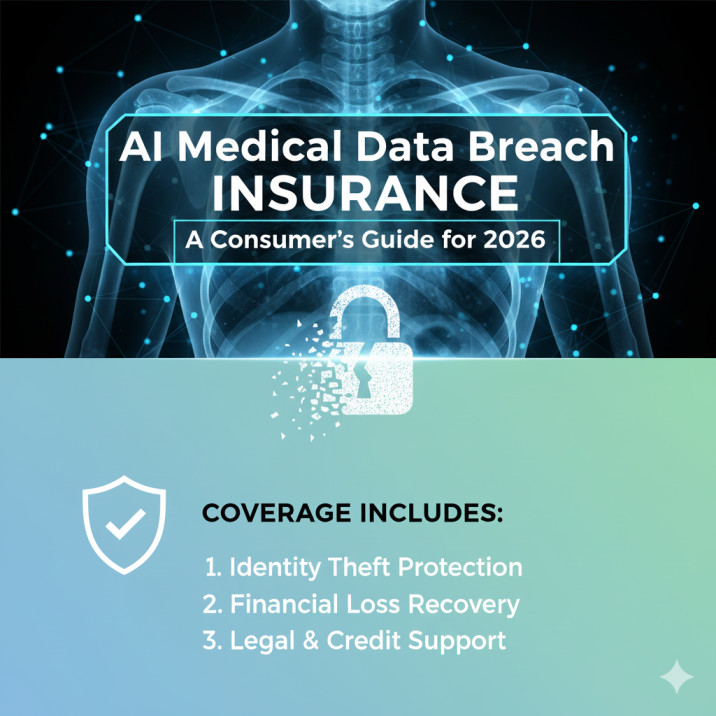
The insurance industry, recognizing the scale of the AI-driven liability, is moving toward specialized solutions. By 2026, expect consumer protection to shift from generic “identity theft riders” to sophisticated AI Medical Data Breach Insurance endorsements.
Anticipated 2026 Coverage Features
The new generation of personal cyber liability coverage will need to address the systemic risks introduced by AI:
| Feature | Standard Identity Theft Rider | Projected AI Medical Data Breach Insurance |
| Core Service | Credit Monitoring & Financial Restoration | Full Medical Record Remediation |
| Recovery Specialist | Financial Fraud Investigator | HIPAA Compliance/Medical Identity Advocate |
| Scope of Coverage | Debt, Credit Scores, Bank Accounts | Correcting PHI at Provider Level, Disputing EOBs |
| Legal Coverage | Limited to civil identity theft lawsuits | Coverage for legal fees related to malpractice or misdiagnosis resulting from Data Poisoning. |
The Algorithmic Bias Risk
A critical emerging risk is algorithmic bias. If an AI model is trained on flawed data, it can produce outcomes that unfairly target or misdiagnose populations. If a data breach compromises the training data itself (Data Poisoning), the resulting misdiagnosis could lead to costly legal action that far surpasses standard identity theft.
In 2026, look for policies that offer coverage for:
- Costs to Contest Biased Outcomes: Funds to hire independent medical review boards or legal counsel to challenge an AI-driven diagnosis based on compromised or biased PHI.
- Loss of Future Insurability: Protection against being denied life or disability insurance due to artificially inflated or incorrect health risks created by fraudulent medical records.
4. Actionable Steps for Consumers in 2026
Since the insurance market is still catching up to the AI threat, your best defense is proactive vigilance.
1. Audit Your Existing Coverage
- Homeowners/Renters Policy Riders: Check your current policy for an Identity Theft Rider. Note the exact dollar limit for “identity restoration services” and ensure the language specifically mentions Medical Identity Theft. If it only covers credit monitoring, it’s inadequate.
- Credit Card/Bank Benefits: Many premium credit cards offer free identity restoration services. Know the number to call and the scope of their coverage.
2. Implement Digital Health Hygiene
- Review Your EOBs Religiously: Every Explanation of Benefits (EOB) statement must be scrutinized. Look for service dates, provider names, or procedures you don’t recognize. An EOB is your first alert to medical identity theft.
- Use Strong, Unique Passwords: Every patient portal (MyChart, etc.) is a potential vulnerability. Use unique, complex passwords and enable Multi-Factor Authentication (MFA) immediately.
- Don’t Use Public AI for PHI: Never input personal health questions, symptoms, or diagnoses into public generative AI tools unless explicitly guaranteed by a HIPAA-compliant Business Associate Agreement (BAA).
3. Establish a Medical Records Baseline
- Request an Accounting of Disclosures: Under HIPAA, you have the right to request a list of certain disclosures your healthcare provider has made of your PHI. Use this annually to track who has accessed your data.
- Check Your MIB File: The Medical Information Bureau (MIB) is a centralized database used by life and health insurers. Request a free copy of your MIB file to ensure no fraudulent or inaccurate medical information has been reported under your name.
Conclusion: The Era of AI-Risk Accountability
The integration of AI into healthcare is irreversible, and so is the increased risk to patient data. In 2026, the question of who pays when an AI system fails will move from the corporate board room to the consumer insurance marketplace.
Traditional health insurance will not protect your digital sanity or financial standing following an AI medical data breach. Consumers must demand, and ultimately purchase, specialized AI Medical Data Breach Insurance that provides comprehensive legal aid and expert medical record remediation.
Your medical history is the most sensitive data you own. Prepare now to ensure that the promise of AI doesn’t come at the cost of your personal security.