🤖 Introduction: Beyond the Beep
For decades, the humble oven has remained functionally the same. But just as artificial intelligence (AI) has redefined our workplaces and smart homes, it is now stepping boldly into the kitchen. The latest generation of smart ovens and AI cooking appliances are moving past basic timers, using artificial intelligence to truly automate and perfect your meals.
Is this the beginning of the end for cookbook reliance? Or just an expensive gadget phase? Let’s take a look at the technology driving the AI kitchen revolution.
🧠 How AI-Powered Smart Ovens Work
The core innovation in modern smart ovens lies in their ability to use sensors, proprietary algorithms, and machine learning to make real-time adjustments to the cooking process. They achieve this through several key features:
1. Visual Recognition and Sensing in Smart Ovens
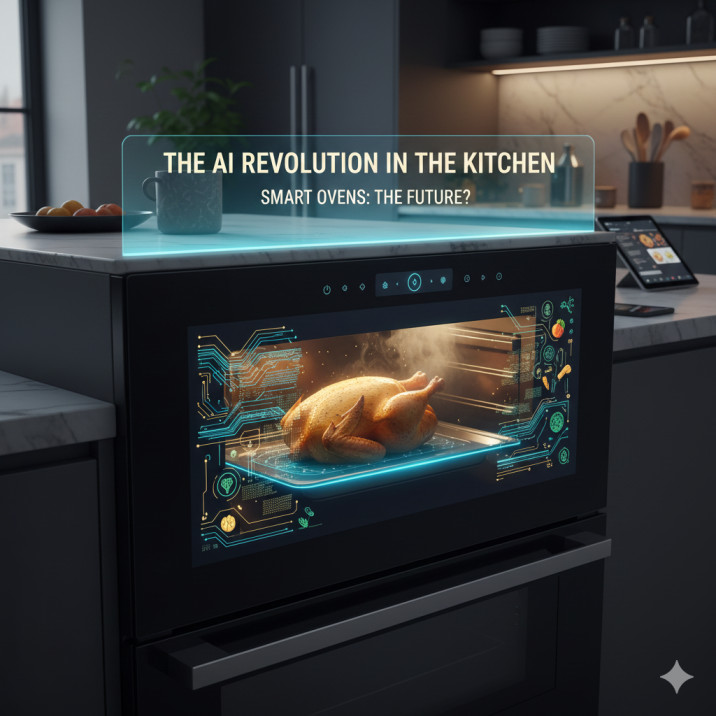
Many high-end AI ovens now use internal cameras and AI vision to identify the food placed inside (e.g., “This is a whole chicken,” or “This is a sheet of chocolate chip cookies”). Some even measure the food’s size or weight to calculate the precise cooking time and temperature curve.
2. Precision Temperature Management
Gone are the days of guesswork. These appliances use hyper-accurate temperature probes and internal algorithms that predict the rate of heating. Instead of just setting the temperature, the smart oven manages complex temperature stages (e.g., a high sear, followed by a low slow-cook) to achieve a perfect finish.
3. Recipe Automation and Learning (Machine Learning)
The user selects a recipe from a massive cloud-connected database. The oven then takes over, automatically adjusting the convection fans, broiler, and heating elements. Crucially, the AI in the kitchen can learn from past successes and failures, refining its profiles based on user feedback and internal monitoring.
📊 The Pros and Cons of AI Cooking Appliances
A balanced view is essential for trust. Here’s a look at the advantages and disadvantages of bringing AI cooking appliances into your home:
| Aspect | The Upside (The Future) | The Downside (The Reality) |
| Consistency | Near-perfect results every time, reducing human error and food waste. | High initial cost; complex electronics can be difficult to repair. |
| Ease of Use | True “set-it-and-forget-it” cooking; ideal for beginners and busy families. | Dependence on Wi-Fi and manufacturer software updates; risk of obsolescence. |
| Energy Efficiency | Precision heating can reduce overall cooking time and energy consumption. | Potential privacy concerns regarding internal cameras and collected cooking data. |
💰 Smart Oven Cost: Is the Investment Worth It?
AI ovens are currently positioned firmly in the premium segment of the appliance market, often costing thousands of dollars.
However, as the smart kitchen technology matures and becomes mainstream, we expect to see prices become more competitive. For the home chef who values consistency, efficiency, and cutting-edge technology, the investment in a smart oven or other AI cooking appliance may already be justified.
🚀 Conclusion: The Future of Home Cooking
The shift from manual cooking to automated, AI-assisted preparation is underway. While the human element of culinary creativity will never truly be replaced, the AI-powered oven is poised to become the most reliable and intelligent sous chef you’ve ever had. It promises to democratize perfect cooking, moving the focus from managing temperature knobs to simply choosing what you want to eat next.