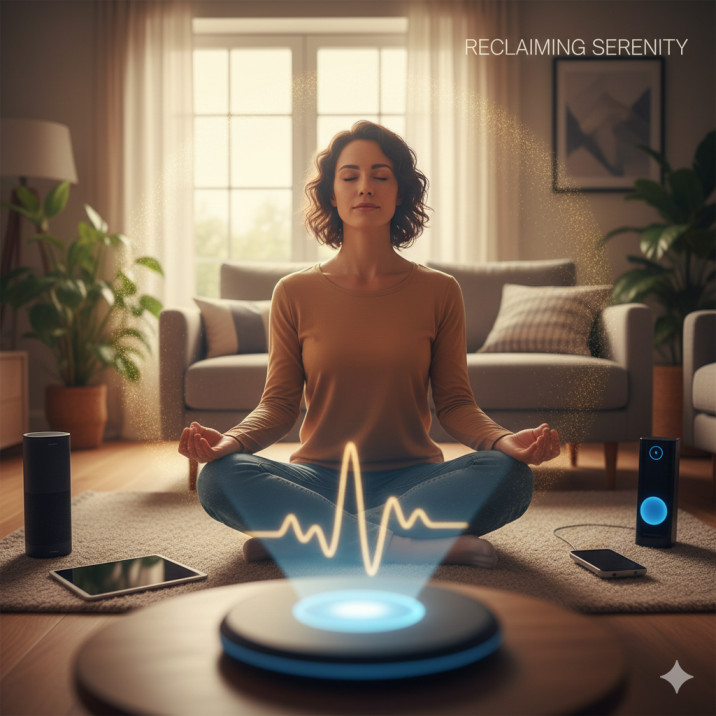
Something subtle happens to a room when every object in it is connected(Smart Devices). It’s not noise, exactly — or not only noise. It’s more like a quality of ambient alertness that pervades the space. The thermostat registers your presence. The doorbell camera logs the delivery. The speaker waits in the corner, its ring glowing softly, listening for its name. The router blinks in the hallway, distributing connectivity to seventeen devices whose individual hums you’ve stopped hearing because each one arrived separately, over months and years, until the composite sound became the new baseline of quiet.
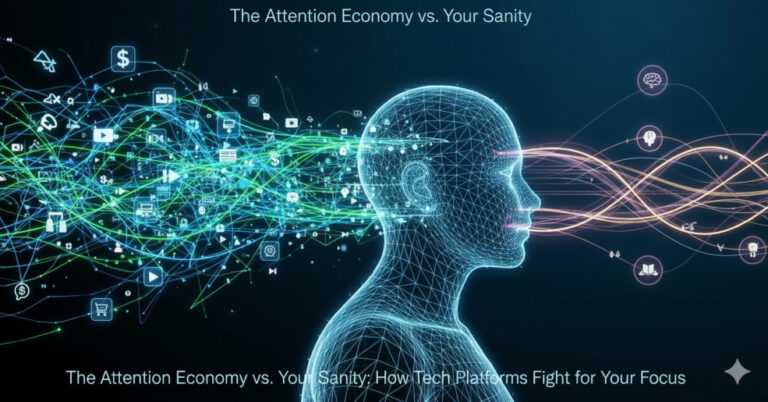
We built smart homes for serenity — for the friction-free life where the lights adjust themselves and the oven preheats before you’ve unlocked the front door. What many people are discovering, with growing discomfort, is that the architecture of the intelligent home produces a different kind of friction: the low-grade cognitive taxation of existing inside a system that is continuously learning, responding, recording, and — in ways that aren’t always transparent — reporting. Health experts and researchers increasingly use the term “technostress” to describe the emotional and physical strain caused by excessive technology use, with symptoms including anxiety, mental fatigue, poor concentration, sleep problems, and emotional exhaustion arising from constant notifications, information overload, and the pressure to remain perpetually available to connected devices. Technostress, in other words, isn’t about any single device. It’s about the cumulative environmental effect of inhabiting a space where technology never fully rests.
Reclaiming serenity from that environment is possible. But it requires something more deliberate than simply muting a notification or putting your phone face-down on a table. It requires engaging honestly with what the connected home has done to the quality of your domestic life — and making choices that the smart home industry has very little commercial incentive to help you make.
The Cognitive Cost of Living Inside an Intelligent Environment
Understanding the problem at its root requires separating two distinct but related phenomena. The first is the sensory dimension — the literal sounds, lights, and interruptions that smart devices generate. The second is the psychological dimension — the persistent background awareness that you are being observed, measured, and responded to by systems you don’t fully understand and can’t entirely control.
Microsoft’s Work Trend Index reveals that digital overload has increased stress levels by 37% among knowledge workers, while Gallup’s State of the Workplace confirms that remote work has become permanent for 58% of Americans — intensifying reliance on digital tools in the same domestic spaces that are also supposed to provide recovery and rest. The collapse of the boundary between the productive environment and the restorative one is the structural condition that makes smart home technostress particularly persistent. When your home office, your kitchen, your bedroom, and your living room are all nodes on the same AI-connected network, the home’s traditional function as a space of withdrawal from the demands of the world is compromised.
Research in 2026 shows a strong link between excessive screen time and mental health challenges, with digital detox trends evolving from niche wellness practices to mainstream mental health strategies — with digital overload occurring when the volume and pace of digital information exceed an individual’s capacity to process it, producing symptoms including difficulty concentrating, emotional reactivity, and a persistent sense of mental fullness that sleep alone doesn’t resolve. The “mental fullness” description will resonate for anyone who has noticed that the end of a day spent navigating multiple connected systems leaves them feeling simultaneously tired and wired — a physiological state that researchers associate with chronic sympathetic nervous system activation that doesn’t fully switch off when the screens go dark.
The smart device surveillance dimension adds another layer that the general conversation about technostress tends to underweight. When the AI assistant is listening for its wake word, when the smart TV is tracking your viewing patterns, when the doorbell camera is building a library of who comes and goes, and when the connected kitchen devices are logging what you eat and when — the home is not merely an environment containing devices. It has become a continuously operating data collection system whose outputs flow somewhere beyond your walls, through agreements whose terms were accepted in onboarding screens that nobody reads. Our analysis of what smart home IoT devices are really collecting and the security vulnerabilities that come with them maps the full technical scope of that collection. Understanding what’s being gathered is, counterintuitively, one of the first steps toward reclaiming the psychological sense of being at home rather than being monitored.
Why Smart Devices Feel Louder Than They Are
The insistence of smart devices isn’t primarily acoustic. It’s attentional. A doorbell notification that takes two seconds to dismiss still demands attention at the moment it arrives — interrupting whatever you were doing, pulling your focus to the phone or the display, requiring you to evaluate whether it warrants a response. Multiply that pattern across every device on your network and across every hour of the day, and what you have is an environment that is constantly bidding for your attention in small increments that individually seem trivial and collectively exhaust the cognitive capacity that was supposed to be available for living.
ACM Human-Computer Interaction research on sensory triggers and smart home technology confirms that wearable and mobile devices can facilitate awareness of sensory triggers and heightened emotional states — but that the same sensitivity to environmental input that makes this useful also means that poorly designed notification ecosystems can contribute to sensory overload and dysregulated physiological states. Dysregulation is the technical term. In lived experience, it presents as the feeling of never being quite settled, never being fully present in the room you’re in because some part of your attention is always monitoring the peripheral field of device activity.
The sleep dimension of this is among the most documented harms. Research in 2026 confirms that reducing screen time, especially before bed, enhances circadian rhythm and sleep duration — and that dedicated periods each day without smartphones, laptops, or tablets have become one of the key digital detox trends implemented by both professionals and households seeking to restore the quality of their rest. The relationship between smart device use and sleep degradation is not merely about blue light exposure, though that is a real factor. It’s about the activation state that persists when the last thing you did before closing your eyes was check a notification, and the first thing you do upon waking is reach for the device that’s been processing your data throughout the night.
PMC research published in Healthcare in 2025 on smart gadgets and wearable technology for stress monitoring notes that continuous monitoring and recording of user activities via integrated sensors creates a feedback relationship between the person and the device that, while valuable for clinical purposes, can itself become a source of preoccupation when applied to everyday domestic life. The health tracker that should be reassuring you becomes an additional thing to check. The sleep score that is supposed to help you rest becomes a metric to be anxious about. The smart home dashboard that centralises all your environmental data becomes another screen that demands your attention before you’ve found the serenity the smart home was supposed to provide.
The mental health insurance dimension of this is more direct than it might initially appear. As we examined in our piece on mental health insurance coverage and the growing complexity of accessing support in 2026, the demand for therapy and mental health services has been rising faster than the system’s capacity to meet it. Technostress and smart home-related anxiety are among the presenting concerns appearing with greater frequency — and understanding the environmental contributors is part of the therapeutic conversation that insurers are now, slowly and imperfectly, being asked to support.
The Practical Architecture of Serenity in a Connected Home
Reclaiming serenity from a smart home is not, at heart, a technology problem. It’s a design problem — a question of deliberately designing the environment you want to live in rather than accepting the environment that accumulated by default. The interventions that actually work address the attentional, sensory, and psychological dimensions of technostress simultaneously rather than treating them as separate problems.
Evidence from 2026 highlights specific practices with documented mental health benefits: creating dedicated device-free periods each day produces calmer minds and improved emotional regulation; reducing screen time before bed enhances sleep quality; and stepping away from digital interactions fosters more meaningful in-person engagement and reduces loneliness — with digital sabbaticals of 24-48 hours offline linked to lower stress levels, improved mood, and greater life satisfaction. What these findings share is their emphasis on boundaries — physical, temporal, and spatial — as the mechanism through which serenity is reclaimed. You don’t fix the problem by finding a quieter device. You fix it by designating territories within your home and day where devices don’t govern.
Disabling non-essential notifications reduces cognitive fatigue by eliminating the constant interruptions from pings and alerts that increase stress and reduce productivity — with screen-free zones in bedrooms and dining areas improving sleep quality and strengthening real-life social connections, while using analog tools for tasks like journaling and planning improving retention, attention, and creativity. The dining table is the intervention with the most immediate relational impact: a household that agrees to keep phones off the table during meals is actively restoring a boundary that the smart home has eroded, reasserting that some human interactions take priority over device attention.
The Journal of Medical Internet Research confirms that mindful technology use correlates with improved mental health outcomes and reduced stress levels — with Mayo Clinic identifying three core practices: setting intentional boundaries around technology use, maintaining awareness of how digital tools affect physical and mental state, and creating healthy habits that prioritise human connection and physical wellbeing over digital consumption. The intentionality element is what separates this from generic advice to use technology less. It’s not about reducing hours arbitrarily. It’s about understanding which uses of your connected devices are genuinely serving you and which have become automated habits that your environment performs on your behalf without your conscious choice.
Digital minimalism is emerging as an increasingly relevant lifestyle choice as people recognise the need to break free from the constant flood of information and notifications — with the movement grounded not in technophobia but in the recognition that meaningful engagement with fewer digital tools produces better outcomes than passive consumption of more. Cal Newport’s articulation of this principle — that the value of a technology must be weighed against the full cost of using it, including the attention cost, the psychological cost, and the opportunity cost of the things you don’t do because the device is doing them — is the philosophical foundation underneath the practical interventions. Not every smart home device is worth the ambient hum it adds to your environment. Auditing them deliberately, and removing the ones that take more than they give, is an act of environmental design rather than technological rejection.
The data collection that happens inside smart home ecosystems connects to the broader privacy conversation explored in our analysis of the data rights economy and who controls the information that smart devices generate. Understanding that your AI assistant’s always-on listening, your smart TV’s content tracking, and your connected appliances’ usage logs are all feeding commercial data pipelines — including, increasingly, insurance underwriting models as we examined in our piece on how AI smart ovens and connected kitchen devices are reshaping both cooking and data collection — changes the nature of the serenity question. It’s not just about quieting the noise. It’s about understanding what the noise is producing, and deciding what you’re actually willing to trade for the convenience it comes with. Our broader piece on what telematics and connected devices are really tracking in 2026 puts the smart home data conversation in its full commercial context.
Frequently Asked Questions
What is technostress and how do smart home devices cause it?
Technostress is a term used by health experts and researchers to describe the emotional and physical strain caused by excessive technology use. Smart home devices contribute to technostress not primarily through their individual demands but through their cumulative effect on the home environment: the always-on listening of voice assistants, the continuous notification feeds from connected devices, the persistent awareness of being monitored and recorded in a space that was previously experienced as private, and the collapse of the boundary between productive and restorative environments when the home becomes simultaneously a workplace and a data collection system. Symptoms include anxiety, mental fatigue, poor concentration, sleep problems, and emotional exhaustion — the same symptoms appearing in clinical presentations of burnout, and increasingly common among people living in densely connected smart home environments.
How do I create screen-free zones in a smart home?
Creating screen-free zones in a connected home requires making explicit decisions that override the default connectivity architecture of smart devices. The most impactful zones, supported by research, are the bedroom and the dining table. For the bedroom: move charging stations out of the sleeping space, disable smart speaker microphones or physically disconnect them overnight, replace phone alarms with a dedicated alarm clock, and set all devices to Do Not Disturb from one hour before your target sleep time. For the dining table: establish a household agreement that phones remain in another room during shared meals, and disable the smart display or speaker in the kitchen during meal times. Research from the Routledge psychology review confirms that these spatial boundaries improve sleep quality and strengthen in-person social connections — outcomes that no smart home feature currently delivers at the same level.
What is digital minimalism and how does it apply to smart home ownership?
Digital minimalism is a philosophy of technology use — articulated most comprehensively by Cal Newport — that holds that the value of a digital tool must be weighed against the full cost of using it, including the attention cost, the psychological cost, and the opportunity cost of the activities displaced by device use. Applied to smart home ownership, digital minimalism involves auditing your connected devices deliberately: identifying which ones produce genuine value that justifies their presence on your network and in your attentional environment, and removing or disabling those that don’t. A smart thermostat that genuinely reduces your energy bill and requires no ongoing attention from you is a minimalist-compatible device. An AI assistant that you check compulsively and that contributes to background vigilance in your home probably isn’t. The goal is not fewer devices as an end in itself, but a home environment where the devices present are earning their place through genuine, proportionate value.
How do digital detoxes actually improve mental health — what does the research say?
Research from 2026 identifies several specific, documented benefits of digital detox practices. Reducing exposure to constant notifications and information overload produces calmer minds and improved emotional regulation by allowing the sympathetic nervous system activation associated with notification processing to downregulate. Reducing screen time before bed enhances circadian rhythm and sleep duration, with even 30-60 minutes of screen-free time before sleep improving sleep onset and quality. Limiting recreational digital screen use increases self-reported overall mental wellbeing and mood, according to psychology research cited by Routledge. Digital sabbaticals of 24-48 hours have been linked to lower stress levels, improved mood, and greater life satisfaction across multiple studies. The Journal of Medical Internet Research confirms that mindful technology use — not elimination but intentional, boundaried use — correlates with improved mental health outcomes and reduced stress levels.
Are smart home devices also collecting data that affects my insurance or financial profile?
This is an emerging and underexamined dimension of smart home ownership. Connected kitchen devices, smart TVs, AI assistants, and connected vehicles all generate data about your behaviour, health habits, location patterns, and lifestyle that is commercially valuable to insurance companies and data brokers. The GM OnStar case — where driving data from 14 million vehicles was sold to LexisNexis and then to insurers to adjust premiums without customer knowledge — is the most documented example, but the architecture applies more broadly to smart home ecosystems. Your smart home’s data is being processed under terms of service you accepted at onboarding, and may be shared with third-party data brokers, analytics providers, and potentially insurance underwriting platforms. Understanding your data rights — including your right to request disclosure of what data is being collected and by whom, under the Fair Credit Reporting Act and applicable state privacy laws — is the most practical protective action available to smart home consumers in 2026.
The Bottom Line
Research from 2026 confirms that limiting recreational digital screen use increases self-reported overall mental wellbeing and mood — and that the people developing the healthiest relationships with technology in 2026 are not those who use the most sophisticated devices, but those who have become most deliberate about when, where, and why they engage with them. Serenity, in a connected home, is not a product feature. It’s not something that will arrive with the next firmware update or be delivered by the next generation of quieter, more ambient AI assistants. It’s an environmental condition that requires active design — spatial, temporal, and attentional boundaries that you create and maintain deliberately against the structural incentives of an industry that profits from your continuous engagement.
The smart devices will keep humming. The question you’re actually answering, in how you respond to them, is not whether you want a connected home. It’s what kind of person you want to be inside it.