A smart home in 2026 usually means two separate things bundled under one label: a network of devices that watch and secure the physical space, and a growing set of sensors that monitor what’s actually in the air people are breathing inside it. Most coverage treats these as unrelated categories — security cameras in one article, air purifiers in another. They’re increasingly capable of becoming part of the same connected system, although the degree of interoperability still depends on the devices, platforms and standards involved. This piece treats them as one framework rather than two separate shopping guides, because that’s closer to how these systems actually get built and used now.
| Area | What to monitor/check | Why it matters |
| Device Security | Updates, authentication, vulnerability disclosure | Reduces IoT compromise risk |
| Privacy | Cloud storage, retention, local processing | Limits unnecessary data exposure |
| Interoperability | Matter certification and supported ecosystems | Reduces platform fragmentation |
| Air quality | PM2.5, CO2, optional VOC monitoring | Identifies pollution and ventilation patterns |
| Insurance | Qualifying protective devices | May affect available discounts |
| Resilience | Local/offline operation | Keeps essential functions available during outages. |
What Actually Qualifies as a Smart Home in 2026
The term has drifted enough that it’s worth being precise. A smart home isn’t just a house with a voice assistant and a couple of smart bulbs — that describes a house with a few connected gadgets, not an integrated system. For the purpose of this guide, a useful definition of a smart home in 2026 involves devices that can communicate with each other and a central hub or app, ideally over a shared standard rather than isolated single-brand ecosystems, with at least some functionality that continues working during an internet outage rather than depending entirely on a cloud connection. That last point matters more than it sounds: a lock or a smoke detector that stops functioning the moment your internet goes down isn’t meaningfully smarter than the non-connected version, and it’s a real gap worth checking before buying anything that promises “smart” features.
By this more precise definition, a household with a security camera, a smart lock, a thermostat, and an air quality monitor that all report into the same hub and can trigger each other — an open window pausing the HVAC system, a smoke alarm unlocking the doors automatically — is meaningfully more of a smart home than a house with ten disconnected single-purpose gadgets that never talk to each other at all.
Smart-Home Security Risks Worth Actually Understanding
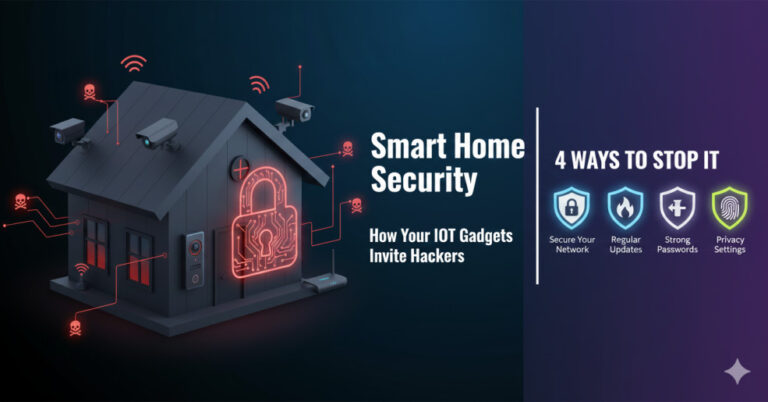
The security risk with connected devices isn’t primarily about a stranger watching your camera feed, dramatic as that scenario sounds. The more common and more consequential risk is a compromised device being recruited into a botnet, or an unpatched vulnerability giving an attacker a foothold on your home network that then spreads to more sensitive devices like a laptop or a phone. NIST’s IoT Device Cybersecurity Capability Core Baseline, published as NISTIR 8259A, identifies several core technical capabilities for securable IoT devices,including device identification, configuration, data protection, logical access control, secure software updates, cybersecurity state awareness and device security. In plain terms: a lot of the actual security risk is baked into the device before it ever reaches your home, and no amount of careful password management fully compensates for a device that was never built with basic security capabilities in the first place. NISTIR 8259 Rev. 1 was finalized in April 2026, superseding the original NISTIR 8259 and updating the manufacturer’s foundational cybersecurity guidance
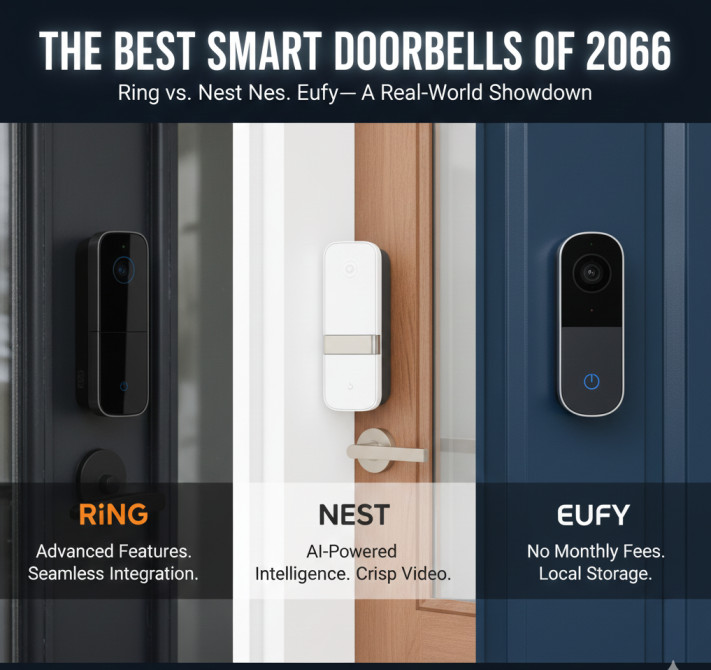
This is precisely the gap the FCC’s U.S. Cyber Trust Mark program is meant to close for consumers who can’t personally audit a device’s firmware. The program, which certifies consumer IoT products against NIST-aligned cybersecurity criteria and displays a shield logo with a scannable QR code linking to a security registry, changed hands in April 2026 when the FCC named the ioXt Alliance as the new lead administrator after the program’s original administrator withdrew amid a national security review. That transition is worth knowing about specifically because it means the program’s rollout has been slower than originally planned — as of now, checking for the Cyber Trust Mark on a specific device is still more the exception than the rule, but it’s the FCC-backed cybersecurity labeling program worth watching for as more manufacturers get certified through 2026 and beyond. If cameras specifically are your main entry point into a smart home setup, our comparison of Ring, Arlo, and Eufy’s AI-based people-detection cameras covers the practical security and detection differences between the current major options in more depth than fits here.
Privacy and Data Collection: What These Devices Actually Gather
Beyond the security question of whether a device can be hacked sits a separate question of what it collects even when working exactly as intended. Cameras and doorbells capture continuous or motion-triggered video, often stored on a manufacturer’s cloud servers rather than locally, and voice assistants process audio that may include more of a household’s conversation than most users realize, depending on wake-word sensitivity and retention settings. Air quality monitors are generally lower-risk on this front since they’re typically reporting environmental readings rather than personal activity, but even these can reveal occupancy patterns — a sharp CO2 spike is a reasonably reliable proxy for “someone is home and the room is occupied,” which is itself a data point some users may not realize they’re generating.
The practical response isn’t avoiding these devices — it’s checking, specifically, whether local storage or local processing is available as an option, since a camera or voice assistant that can operate without sending everything to a manufacturer’s servers by default gives you meaningfully more control over your own data. This connects to a broader discipline worth applying consistently: treat a device’s default privacy settings as a starting point to review and adjust, not a setting you can safely leave untouched.
Matter and Interoperability: The Standard That Actually Fixes the App Problem
For years, the single biggest practical frustration in building a smart home wasn’t security or privacy — it was needing five different apps from five different brands that didn’t talk to each other, with a smart lock from one company unable to trigger a light from another without a clunky third-party workaround. Matter is an IP-based smart-home standard designed to let compatible devices from different manufacturers work together through supported ecosystems, with local connectivity reducing reliance on cloud-to-cloud integrations.
This matters for both halves of this article’s subject. A Matter-certified security device and a Matter-certified air quality sensor can genuinely work together — where the relevant device types and automation platform support the required capabilities — in a way that cross-brand devices on separate proprietary protocols generally can’t. Our detailed guide to fixing Matter connectivity issues covers the practical setup problems people actually run into with multi-brand Matter networks, which is worth reading before buying a wave of new devices assuming everything will connect painlessly on the first try.
Indoor Air Quality: The Standards Worth Actually Knowing
This is the half of the smart home conversation that gets far less attention than security, despite genuinely affecting daily health. The EPA’s most recent revision to the National Ambient Air Quality Standards set the primary annual PM2.5 standard at 9.0 micrograms per cubic meter, a meaningful tightening from the previous 12 micrograms per cubic meter standard, reflecting updated health science on fine particulate exposure. The EPA’s revised annual PM2.5 standard is an outdoor ambient-air standard, not an indoor-air limit. It can provide useful context when interpreting indoor measurements, but it should not be presented as a regulatory threshold for homes.
CO2 can be useful as an indicator of ventilation, but it should not be treated as a universal health threshold. Sustained elevated readings can indicate that outdoor-air ventilation may be insufficient for the number of occupants and the space, while the appropriate interpretation depends on the building and ventilation system. TVOC readings can help identify changes in indoor air and possible pollution sources, but they are harder to interpret than PM2.5 or CO2. A TVOC reading combines different chemicals with potentially very different health effects, and there is no universal federally enforceable indoor TVOC threshold for homes. Low-cost monitors also vary in how they detect and report VOCs. Treat TVOC readings primarily as a signal to investigate possible sources—such as cleaning products, paints, furnishings or solvents—rather than as a standalone diagnosis of indoor-air safety.
Indoor-air monitors are useful for identifying trends and potential problems, but their readings should not be treated as a medical assessment or a definitive measure of health risk.
Energy Management: Where Smart Devices Genuinely Pay for Themselves
Unlike security devices, which are largely a cost with a risk-reduction payoff, smart energy management devices can produce a direct, measurable return. A properly configured smart thermostat that learns occupancy patterns and adjusts heating and cooling accordingly is one of the more consistently documented energy-saving smart home purchases, since it directly targets the single largest energy expense in most homes without requiring any behavior change from the occupants beyond the initial setup. Smart plugs and energy monitoring devices add a smaller but real benefit by surfacing which specific devices are drawing power unnecessarily, particularly older appliances left in standby mode continuously.
Insurance Implications Worth Factoring In
Smart home devices increasingly intersect with home insurance in ways worth understanding before assuming a purchase is purely a convenience expense. Some insurers offer discounts or other incentives for qualifying protective devices, such as monitored security systems, water-leak sensors or smart smoke detectors. Eligibility and discount amounts vary, so homeowners should confirm the requirements directly with their insurer. A compromised smart device can create privacy, security or identity-related risks, but whether any resulting loss is covered depends on the wording and exclusions of the relevant homeowners, renters or cyber-insurance policy. Our guide on whether homeowners insurance covers identity theft covers exactly this overlap in more depth, including where a standard homeowners policy stops and a dedicated identity protection or cyber add-on becomes necessary — worth a look specifically if your smart home setup includes several always-listening or always-recording devices.
Which Devices Are Worth Considering
Given everything above, a few categories consistently earn their place in a 2026 setup. A security camera or video doorbell with a genuine local-storage option, not just cloud-only recording, addresses both the security and privacy concerns raised earlier — our head-to-head comparison of Ring, Arlo, and Eufy covers which of the major options actually deliver this. A smart lock is worth the investment specifically when it carries independent security testing rather than marketing claims alone — our security-tested comparison of August, Yale, and Schlage is the more detailed resource on that specific decision. On the air quality side, a monitor tracking PM2.5, CO2, and VOCs together, rather than a single-metric device, gives a genuinely useful picture rather than one data point taken out of context — and a connected smoke and CO detector remains one of the highest-value additions on both the safety and the insurance-discount side of this framework simultaneously.
A Smart Home Setup Checklist for 2026
Pulling this together into something actionable: confirm each device you’re considering has a documented local-control fallback rather than a total cloud dependency; check for Matter certification specifically if you’re building a multi-brand system, since it’s the interoperability standard actually solving the app-fragmentation problem; look for the FCC Cyber Trust Mark where available, and in its continued absence, check whether the manufacturer publicly documents its update and vulnerability disclosure practices; review and tighten each device’s default data retention and cloud-storage settings rather than accepting the defaults; Consider a continuous indoor-air monitor that measures PM2.5 and CO2, with VOC monitoring as an additional signal where useful, since this is the category most households skip despite it addressing daily health rather than just security; and call your insurer specifically to ask which of your planned devices qualify for a premium discount before assuming the purchase is a pure cost with no offsetting return.
Frequently Asked Questions
What actually counts as a smart home in 2026?
For the purposes of this guide, a smart home is a home in which connected devices can be monitored, controlled, or automated through a network, app, platform, or compatible ecosystem. The devices do not necessarily have to use one shared hub or the same manufacturer. What matters is the level of useful connectivity and automation they provide.
For example, a home might combine smart lighting, security cameras, locks, thermostats, leak sensors, and air-quality monitors from different manufacturers. Some may communicate locally through a compatible standard such as Matter, while others may depend partly or entirely on a manufacturer’s app or cloud service. The result is still a smart home, although the degree of interoperability, local control, and resilience can vary considerably.
What is the FCC Cyber Trust Mark and does it matter yet?
The U.S. Cyber Trust Mark is a voluntary FCC-backed cybersecurity labeling program for qualifying consumer wireless Internet of Things (IoT) products. It is intended to help consumers identify products that meet defined cybersecurity requirements, with the label linked to additional product information through a QR code.
The program is not a general cybersecurity standard or a guarantee that a device cannot be hacked. Instead, it provides a way for participating products to demonstrate compliance with specified cybersecurity criteria. In April 2026, the FCC selected the ioXt Alliance as the program’s new Lead Administrator.
For shoppers, the label can be one useful factor when comparing connected devices, but it should be considered alongside the manufacturer’s software-update policy, vulnerability-disclosure practices, data-handling policies, and the device’s available security controls.
What indoor air quality levels should a smart monitor flag as concerning?
There is no single set of universal indoor-air thresholds that can be applied to every home and every monitor.
For PM2.5, the EPA’s current annual standard is 9.0 micrograms per cubic meter, but this is an outdoor ambient-air quality standard, not a regulatory limit for indoor homes. It can provide useful context when interpreting measurements, but it should not be presented as an indoor safety threshold.
CO2 can be useful as an indicator of ventilation. Sustained elevated readings may suggest that outdoor-air ventilation is insufficient for the number of occupants and the characteristics of the space. However, CO2 should not be treated as a universal health-risk cutoff, and a single reading above a particular number does not by itself establish that a room is unsafe.
TVOC measurements require even more caution. A TVOC reading combines different volatile organic compounds that can have very different sources and health effects, and there is no universal federally enforceable indoor TVOC threshold for homes. Consumer monitors also differ in how they detect and report VOCs.
A practical approach is therefore to use indoor-air monitors primarily to identify trends, unusual changes, and possible pollution sources. If readings remain persistently unusual, investigate the source and consider professional assessment where appropriate rather than treating the monitor’s number as a medical or regulatory diagnosis.
What is Matter and why does it matter for smart home interoperability?
Matter is an IP-based smart-home interoperability standard developed by the Connectivity Standards Alliance. It is designed to help compatible devices from different manufacturers work together through supported smart-home ecosystems instead of relying exclusively on separate, brand-specific integrations.
Matter can simplify setup and control across compatible products and can support local communication, which can reduce reliance on cloud-to-cloud integrations. However, Matter does not mean that every smart-home device will automatically work with every other device, nor does it eliminate manufacturer apps or cloud services.
Before purchasing a device, check both its Matter certification and the specific features supported by the smart-home platform you intend to use. Compatibility can vary by device type, controller, ecosystem, and manufacturer implementation.
Can smart home devices lower a homeowners insurance premium?
Some insurers offer discounts, incentives, or other benefits for qualifying protective devices such as monitored security systems, water-leak sensors, and smart smoke or fire detection equipment. However, eligibility, qualifying devices, discount amounts, and program requirements vary by insurer and jurisdiction.
The presence of a smart device does not automatically reduce a homeowner’s premium. Before buying equipment partly for insurance purposes, contact the insurer and ask which devices qualify, whether professional monitoring is required, and what documentation or installation requirements apply.
The safest assumption is that any potential insurance saving is policy-specific rather than a guaranteed financial return.
Is it worth buying a security camera or smart lock without checking for a security certification?
Security certification or independent security assessment can be useful when comparing connected devices, but the absence of a particular certification does not by itself prove that a device is insecure.
Look for evidence that the manufacturer provides important security capabilities such as unique device identification, secure software updates, protection of stored and transmitted data, appropriate access controls, and a process for addressing security vulnerabilities. NIST’s IoT cybersecurity guidance provides a useful framework for evaluating these capabilities.
Where available, a recognized cybersecurity label such as the FCC Cyber Trust Mark can provide additional information about a participating product’s security characteristics. However, certification should not be treated as a guarantee against compromise.
For a camera or smart lock, also check how long the manufacturer expects to provide security updates, whether the device supports strong authentication, what data it collects, where recordings or other information are stored, and what happens if the internet or manufacturer’s cloud service becomes unavailable.
The Bottom Line
A genuinely useful 2026 smart home framework treats security devices and air quality monitoring as one connected system rather than two separate purchases, built around real standards — the FCC’s emerging Cyber Trust Mark, NIST’s IoT baseline, NIST’s IoT cybersecurity guidance, the FCC’s Cyber Trust Mark program, EPA guidance on particulate matter and indoor air quality, and the Connectivity Standards Alliance’s Matter standard
Matter interoperability, honest local-control options, and a genuine air quality monitor round out what separates a scattered collection of gadgets from an actual smart home, and checking insurance discounts before buying rounds out the financial picture most guides skip entirely.
How We Evaluated This Framework
This guide draws on guidance from NIST and the U.S. Environmental Protection Agency, information published by the Connectivity Standards Alliance and FCC, and manufacturer documentation where device-specific capabilities are discussed. Standards and regulatory information were checked against the organizations’ published material available at the time of the September 2026 update. Because smart-home capabilities and insurance programs change frequently, readers should verify current device specifications and insurance eligibility before making a purchase.