Every Nigerian who has invested in a solar system in the last two years understands the particular quality of anxiety that comes with the territory. Not the anxiety of living without power — most of them know that intimately, which is why they bought the system in the first place. The new anxiety is different: it’s the 3am awareness of a ₦1.5 million lithium battery sitting in an exposed location, the mental calculation of what it would cost if the inverter failed on a Tuesday in rainy season, the quiet dread of a neighbour’s story about a fire that started at the junction between the panel and the charge controller. Solar energy has given millions of Nigerians genuine power independence. It has also created a new category of high-value, underinsured asset sitting in homes and businesses across the country — and in 2026, both the risks and the insurance options available to address them deserve a much more serious conversation than most solar installers are having with their customers.
The African solar market recorded its fastest annual growth in history in 2025, and the trend has accelerated into 2026 — with even the Aso Rock Presidential Complex converting to 100% hybrid solar infrastructure in early 2026, signalling institutional confidence in the technology. At the household and business level, the investment figures confirm the shift: complete 6kW whole-home solar systems are now selling for up to ₦5,871,600 with installation, and 5kWh lithium LiFePO4 batteries — which are rapidly replacing lead-acid as the storage standard — are selling at ₦1 million and above, with hybrid inverters adding another ₦700,000 to ₦1.3 million to the system cost. A mid-range solar installation in 2026 represents a capital commitment that puts it firmly in the category of assets that require formal protection — not just installer warranties and physical security measures, but genuine, structured insurance against the risks that warranties explicitly exclude.
The Risks That Manufacturer Warranties Don’t Cover
The first thing anyone insuring a solar installation in Nigeria needs to understand is the fundamental difference between a manufacturer’s warranty and an insurance policy — because conflating them is how people discover a gap in the worst possible circumstances.
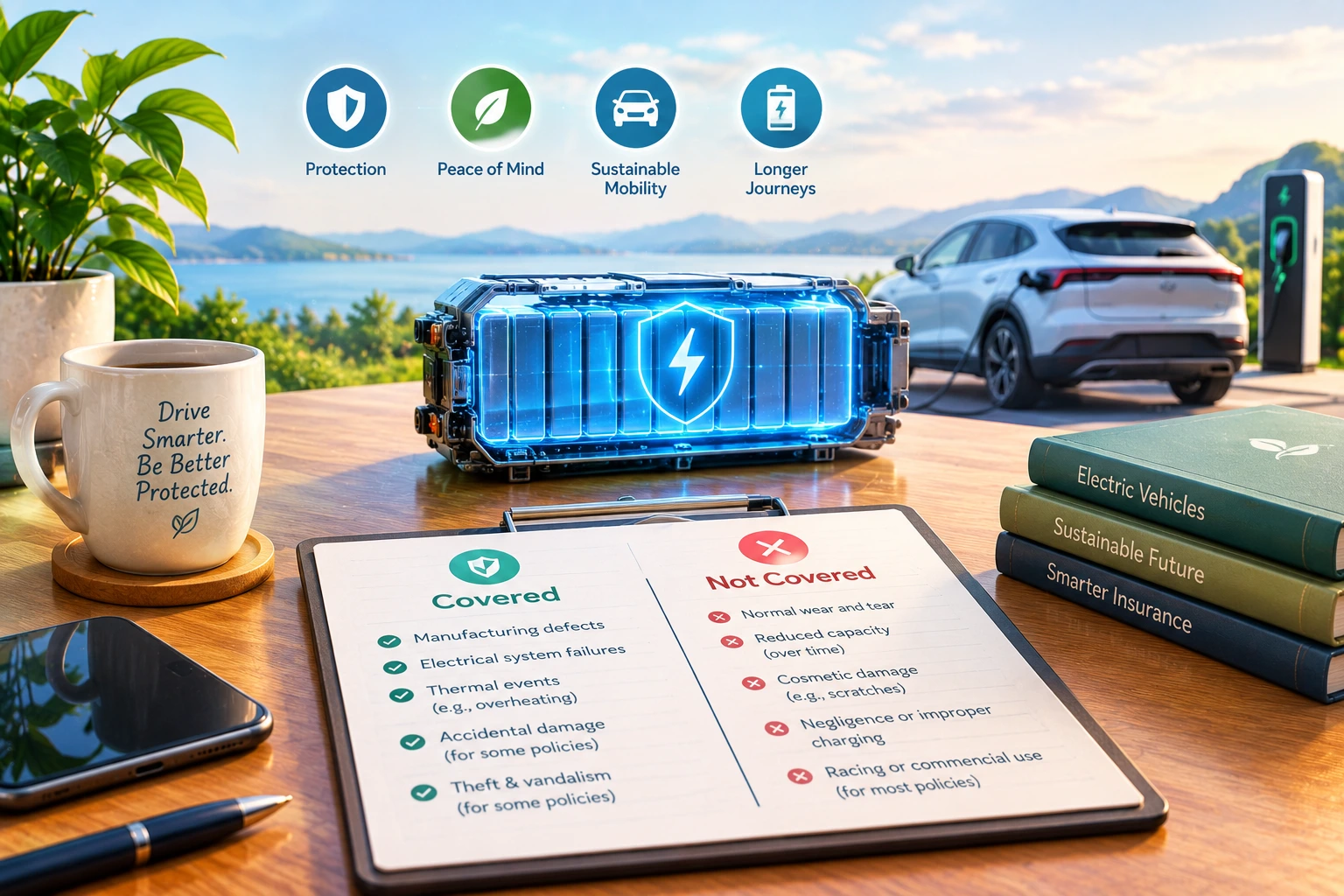
A manufacturer warranty covers defects in materials and workmanship that cause a product to fail to perform as specified. itel Solar Nigeria’s inverters carry a 3-year warranty, batteries a 5-year warranty, and solar panels a 15-year warranty, with free nationwide delivery — warranty terms that are standard across most reputable brands. What that warranty covers is narrow: it covers the product failing because the manufacturer made it incorrectly. It explicitly does not cover theft, fire damage from external causes, flood, lightning strike, power surge damage from the national grid, accidental damage during installation or subsequent work, or any damage caused by third parties.
In the Nigerian context specifically, those exclusions cover the most likely loss events. The theft epidemic targeting lithium batteries is now documented at a scale that cannot be dismissed as isolated incidents. According to a Nigerian Communications Commission report, criminal networks looted over 504 critical power batteries from telecom infrastructure in 2025, with that trend spilling aggressively into residential neighbourhoods and public lighting systems into early 2026 — with security agencies intensifying raids on localised scrap hubs, known as “Pantaker” markets, where stolen lithium and gel batteries are quickly laundered and resold. The criminal ecosystem exists, it is organised, and it specifically targets lithium iron phosphate batteries precisely because their resale value is high and their origin is difficult to verify once stripped of housing.
The fire risk dimension is equally documented and arguably more dangerous for the assets the fire doesn’t reach directly. In April 2026, the Chief Electrical Inspector of the Federation and the Nigerian Electricity Management Services Agency (NEMSA) issued a strongly worded public notice acknowledging a solar panel fire crisis in Nigeria — driven by unqualified technicians operating freely across the market, installations using substandard cables and damaged panels, and systems assembled without respect for load-bearing limits or ventilation requirements. The NEMSA warning is significant not just as a safety document but as an insurance document: it establishes that substandard installation is a documented, officially acknowledged risk — which means any insurance policy that conditions coverage on installation quality documentation has that precedent to lean on.
A house fire started by a poorly installed solar system is a structural liability that goes well beyond the value of the solar equipment itself. It is the contents of the house, the structure, and potentially the safety of occupants — risks that a manufacturer’s warranty has nothing to say about.
What Nigerian Insurance Policies Can Actually Cover for Solar Systems
The Nigerian insurance landscape for solar equipment sits at an interesting transitional moment in 2026. The Nigeria Insurance Industry Reform Act 2025 — NIIRA 2025 — marks a transformative milestone in Nigerian insurance regulation, consolidating prior insurance laws into a unified framework and positioning the industry for sustainable growth, innovation, and inclusivity under the supervision of the National Insurance Commission, NAICOM. NAICOM reports that Nigeria’s insurance premium has hit ₦2.3 trillion while industry assets have risen to ₦4.8 trillion as of May 2026 — numbers that reflect a sector with both the financial depth and the regulatory structure to provide meaningful coverage for renewable energy assets, even if specific solar products remain undermarketed.
The coverage routes available in 2026 fall into three practical categories.
The first and most direct is a household contents and all-risks policy that explicitly schedules the solar installation as a named item. Nigerian general insurers — regulated by NAICOM under the general insurance category that covers property, equipment, and contents — can extend standard home contents coverage to include solar equipment when it is specifically declared, valued, and listed in the schedule. The critical word is “declared.” A solar system installed after a policy was taken out and never notified to the insurer is likely to be treated as undisclosed property with disputed coverage in a claim. Notifying your insurer of a new solar installation, providing a valuation and installation documentation, and paying any additional premium required is not optional if you want certainty that the coverage applies.
The second route is a plant and machinery policy, which is available through most Nigerian general insurers for commercial and industrial solar installations. This is more appropriate for businesses running solar systems to power operations — clinics, schools, commercial buildings — where the solar equipment is part of the productive asset base of the enterprise. Plant and machinery coverage typically addresses breakdown, accidental damage, and in some policy structures, theft and fire, for operational equipment.
The third and emerging route is specialised renewable energy coverage, which is the direction the market is moving globally and slowly migrating toward in the Nigerian context. On the global side, Solar Insure has introduced a 30-year protection plan for residential energy storage systems that provides battery replacement provisions and covers against manufacturer defaults — filling gaps that standard manufacturer warranties leave when manufacturers face financial distress or insolvency. BERIS International has similarly developed specialised insurance for solar inverter and storage system manufacturers specifically addressing financial, operational, and cybersecurity risks across the supply chain. These specialist products don’t yet exist in mature form for individual Nigerian policyholders, but the global trend and the domestic market growth make their arrival a near-term expectation rather than a distant aspiration.
The NIIRA 2025 Framework and What It Means for Solar Policyholders
The Nigerian Insurance Industry Reform Act 2025 matters for solar system owners for several practical reasons beyond the general modernisation of the regulatory environment. NIIRA 2025 consolidates and repeals several outdated laws that previously governed the insurance sector, establishing a comprehensive legal and regulatory framework for insurance business in Nigeria, with the National Insurance Commission as the apex regulatory authority ensuring compliance, policyholder protection, and sustainable industry growth. For consumers, the most relevant consequence is the enhanced policyholder protection framework — which gives claimants clearer rights when insurers dispute claims and creates stronger compliance obligations for insurers who underwrite risks they subsequently attempt to exclude on technicalities.
The 11 compulsory classes of insurance mandated under NIIRA 2025, unveiled by the Deputy Commissioner for Insurance Ekerete Ola Gam-Ikon, are designed to protect lives, assets, and businesses while promoting compliance across Nigeria’s economy — with NAICOM and ARIAN deepening strategic collaboration specifically for NIIRA 2025 enforcement and consumer protection. Solar system insurance is not among the compulsory classes — but the existence of a strengthened consumer protection framework means that voluntary policies taken out under NIIRA 2025 have stronger enforceability than their equivalents under the previous fragmented regulatory structure.
The AI and data dimension of Nigerian insurance — increasingly relevant as Nigerian insurers adopt algorithmic underwriting tools — is explored in our analysis of how AI underwriting algorithms are setting insurance premiums across the Nigerian fintech and insurance ecosystem. For solar insurance specifically, the underwriting data that determines your premium — installation quality documentation, property security assessment, location risk rating — is increasingly being processed algorithmically in ways that aren’t always transparent to the policyholder. Understanding the data inputs that determine your premium is as relevant for solar coverage as it is for any other personal or commercial insurance product.
The embedded insurance angle is also emerging in the Nigerian solar market, particularly through fintech-enabled solar financing arrangements where insurers are being integrated directly into solar purchase and installation workflows. Our analysis of how embedded insurance works inside fintech platforms and checkout pages is directly relevant for anyone purchasing solar through a fintech-facilitated payment plan where insurance may be offered as part of the transaction — understanding what that embedded product actually covers, and what it excludes, is essential before accepting it as your primary protection.
What to Demand From a Solar Installation Before Thinking About Insurance
Before the insurance conversation is relevant, the installation quality conversation has to happen — because most Nigerian insurance policies covering solar equipment will condition coverage on installation meeting NEMSA and relevant electrical safety standards. NEMSA’s April 2026 public notice, issued by the Chief Electrical Inspector of the Federation, identified unqualified technicians, substandard cables, and damaged panels as the root causes of the solar fire crisis — and homeowners are advised to ensure their installer is NEMSA-certified and that the installation includes proper load-bearing calculations, ventilation provisions, and cable sizing documentation.
The documentation package required for meaningful solar insurance coverage in Nigeria includes: installation invoice with brand, model, and serial numbers for all major components; installer certification or NEMSA registration number; system specification sheets from the inverter and battery manufacturer; photographs of the installation including cable routing and mounting; and valuation of the complete system. Insurers that ask for none of this and offer quick coverage at low premiums are almost certainly selling a policy that will be difficult to claim against when needed.
The capital involved in a quality solar installation — easily ₦2 million to ₦6 million for a whole-home system — puts it in the category of assets Nigerians would not leave without fire and theft coverage under any other circumstance. The biggest shift in 2026 is the move from tubular/GEL batteries to Lithium-ion LiFePO4, which while more expensive upfront, offers a 10-year lifespan and 90% depth of discharge, making it the most cost-effective long-term choice — but also making individual battery units more valuable and therefore more attractive to theft. The higher the system quality, the higher the theft incentive, and the more important formal insurance coverage becomes.
For Nigerians who have made the excellent financial decision of building energy independence, the complementary financial decision is protecting that independence against the specific risks the Nigerian environment presents. The manufacturer warranty handles manufacturing defects. The NAICOM-regulated insurance policy handles everything else. And as explored in our piece on high-yield savings and financial protection strategies for Nigerian households in 2026, the most resilient financial posture combines income-generating assets with appropriate protection for the infrastructure those assets depend on. A solar system that powers a home-based business and a PiggyVest savings account are both financial assets. Both deserve protection proportionate to their value.
Our broader analysis of the algorithmic insurance economy and how AI is reshaping consumer rights in financial services provides context for understanding the insurance relationship you’re entering when you take out any policy — including the data rights, claims process transparency, and accountability mechanisms that NIIRA 2025 is now strengthening across the Nigerian market.
Frequently Asked Questions
Yes — solar inverters, batteries, and panels can be insured through Nigerian general insurance companies regulated by NAICOM under the Nigerian Insurance Industry Reform Act 2025. The most practical approach is to declare your solar system as a specifically scheduled asset under a household all-risks or contents policy, providing the insurer with installation documentation, component serial numbers, manufacturer specifications, and a system valuation. Solar equipment that is not formally declared to your insurer and scheduled in the policy may not be covered in a claim, even if the policy broadly covers “contents” or “property.” For commercial solar installations, a plant and machinery policy is the more appropriate product. Always verify with the insurer explicitly that theft, fire, accidental damage, and lightning strike are included in the scope of cover for your solar assets before paying the premium.
No — a manufacturer warranty and an insurance policy cover completely different risks. A manufacturer warranty covers defects in materials or workmanship that cause the product to fail to perform as specified. It explicitly excludes theft, fire damage from external causes, flood, lightning, power surge damage from the national grid, accidental damage, or damage caused by third parties. In Nigeria specifically, these excluded risks — particularly theft (organised criminal networks are actively targeting lithium batteries) and fire (NEMSA issued a formal notice in April 2026 acknowledging a solar fire crisis driven by substandard installation) — are the most likely loss events. A manufacturer warranty provides no financial protection against either. A NAICOM-regulated insurance policy addresses the theft, fire, and damage risks that the warranty ignores.
Nigerian insurers covering solar equipment typically require: a complete installation invoice listing brand, model, and serial numbers for the inverter, batteries, and panels; installer identification including NEMSA certification or registration where available; manufacturer specification sheets for major components; photographs of the complete installation including cable routing, mounting points, and battery storage area; and a current market valuation of the complete system. Some insurers may also require confirmation that the installation meets NEMSA electrical safety standards, particularly following the April 2026 NEMSA public notice acknowledging the solar fire risk from substandard installations. Keeping these documents accessible — digitally and in physical form stored away from the installation — is both a policy requirement and practical documentation you will need to support any claim.
The primary documented risks for solar installations in Nigeria in 2026 are: theft of lithium batteries, which is now an organised criminal activity with NCC reporting over 504 critical power batteries looted from infrastructure in 2025 alone, with the trend spilling into residential properties; fire damage, with NEMSA acknowledging a crisis of solar-related fires driven by substandard installations and unqualified technicians; lightning strike damage, which is significant in Nigeria’s rainy season climate; power surge damage from the national grid during unstable supply periods; and physical damage to panel arrays from extreme weather events including high winds during Harmattan or during storm periods. Business interruption resulting from system failure is an additional risk for commercial users whose operations depend on solar power continuity. A comprehensive insurance policy should explicitly name all of these risks in its coverage schedule rather than relying on general “all-risks” language that may be narrowed by exclusions.
The Nigeria Insurance Industry Reform Act 2025 strengthens the consumer protection framework for all insurance policyholders in Nigeria, including those insuring solar equipment. NIIRA 2025 consolidates prior insurance laws into a unified framework under NAICOM supervision, creates clearer policyholder rights in the claims process, and establishes stronger compliance obligations for insurers — making it harder for insurers to dispute valid claims on technicalities than was the case under the previous fragmented regulatory structure. Practically, NIIRA 2025 also established the Insurance Policyholders’ Protection Fund, inaugurated on May 15, 2026, which provides an additional layer of financial protection for policyholders if an insurer faces insolvency. For solar system owners taking out insurance in 2026, policies issued under the NIIRA 2025 framework carry stronger enforceability than those issued under prior legislation. Always verify that your insurer is a NAICOM-licensed entity before purchasing coverage.
The Bottom Line
Solar energy has given Nigeria’s households and businesses something genuinely transformative: the ability to function independently of a grid that cannot be reliably depended upon. That independence has a price — significant capital invested in equipment that sits exposed to theft, fire, weather, and grid instability. The manufacturer warranty that comes with the equipment was designed for factory defects, not for the Nigerian threat environment.
By 2027, lead-acid and tubular batteries will be completely obsolete for high-performance applications, with lithium LiFePO4 standardising due to its 10-15 year lifespan and 90% depth of discharge — which means the average solar investment is not only increasing in size but in the individual value of each component. A 10kWh lithium battery bank worth ₦2 million or more in a residential installation is not an asset that should be left with only a theft-prevention padlock and a manufacturer’s materials warranty standing between the owner and that loss.
The insurance infrastructure exists in Nigeria. NAICOM-regulated general insurers can cover these risks. NIIRA 2025 has strengthened the framework. What is missing in most cases is the specific conversation between the solar installer and the customer about what comes after the installation is complete — and that conversation needs to include insurance as clearly as it includes panel angle optimisation and battery capacity calculations.